Buying a home in Texas is a dream for many, but rising interest rates can make that dream seem just out of reach. If you’re planning to buy a home in 2026, you might be wondering how to make your monthly mortgage payments more manageable, especially in those crucial first years. That’s where temporary buydown mortgages come in—a creative financing tool that’s gaining traction across the Lone Star State. At HudsonSullivan, we’re passionate about helping Texans feel confident in their mortgage choices, and understanding temporary buydowns could be your key to a smoother homebuying journey.
What Is a Temporary Buydown Mortgage?

A temporary buydown mortgage is a special type of loan arrangement where the interest rate is reduced for the first few years of the loan term. After this introductory period, the rate returns to the original note rate for the remainder of the mortgage. The most common types in Texas are the 2-1 and 3-2-1 buydowns, where the rate is lowered by 2% or 3% in the first year, then steps up incrementally until it reaches the permanent rate.
Let’s say you qualify for a mortgage at a 6.5% rate. With a 2-1 buydown, your first year’s payments would be based on a 4.5% rate, the second year at 5.5%, and then years three through thirty at the original 6.5%. The cost of the reduced payments up front is typically paid by the seller, builder, or sometimes the lender.
Pro tip: Ask your lender or real estate agent if a seller-paid buydown is available. In a buyer’s market, sellers may offer this incentive to help their property stand out and close deals faster.
Why Temporary Buydowns Are Gaining Popularity
In 2026, Texas’s real estate market is expected to stay competitive, but with continued interest rate fluctuations, buyers are looking for creative ways to ease into homeownership without stretching their budgets too thin. Temporary buydown mortgages offer a smart solution, especially for first-time buyers or those moving up to a larger home.
The main draw is the ability to lower monthly payments during those early years when cash flow might be tight due to moving costs, renovations, or new expenses. Instead of locking yourself into a high payment from day one, you can gradually adjust as your financial situation stabilizes or improves. This flexibility is especially valuable if you expect your income to rise or plan to refinance before the buydown period ends.
Pro tip: If you’re planning to buy a newly built home, builders in Texas often offer temporary buydowns as an incentive, giving you lower payments while you settle in and furnish your new space.
How Temporary Buydowns Work in Practice
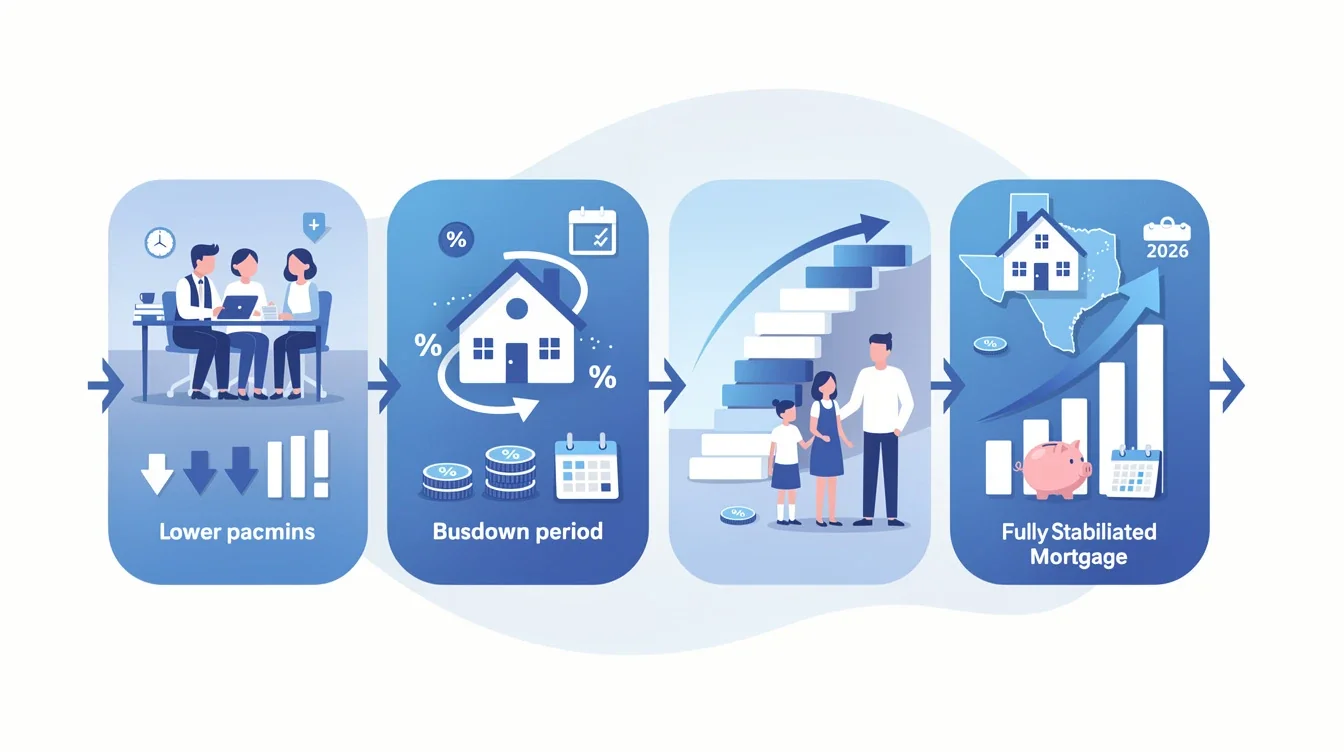
Let’s break down how a typical 2-1 buydown might look for a Texas homebuyer in 2026. Suppose you’re buying a $400,000 home with a 20% down payment. Your mortgage amount is $320,000, and your quoted 30-year fixed rate is 6.5%. Here’s how your payments would change:
- Year 1: Payments based on a 4.5% rate
- Year 2: Payments based on a 5.5% rate
- Year 3 and beyond: Payments based on the original 6.5% rate
The difference in monthly payments over those first two years can free up thousands of dollars. That extra cash could go toward home improvements, paying off other debts, or simply building a solid emergency fund.
The cost of the buydown (the difference between the actual payments and what you would have paid at the full rate) is usually paid up front by the seller or builder. This makes the arrangement even more attractive, as you’re not shouldering an additional financial burden to secure these lower payments.
Pro tip: If your income is expected to increase in the next few years—maybe you’re expecting a promotion or your partner will return to work—a temporary buydown can help you “grow into” your mortgage without financial strain.
Benefits for Texas Homebuyers
The advantages of a temporary buydown mortgage go beyond just saving money in the short term. For many Texans, the peace of mind and flexibility these loans provide are just as important.
First, lower initial payments can make it easier to qualify for a loan or afford a more desirable neighborhood. This can be a game changer in hot Texas markets like Austin, Dallas, or Houston, where every dollar counts. Temporary buydowns also help buffer against financial surprises. If you’re moving from renting to owning, you might face unexpected costs like maintenance, taxes, or HOA fees. Lower payments in those early years can soften the impact as you adjust.
Another benefit is that a temporary buydown doesn’t lock you into a higher interest rate forever. Once the buydown period ends, you’re simply paying the original fixed rate—not an inflated one. And if rates drop or your finances improve, you always have the option to refinance.
Pro tip: Use the money you save during the buydown period to pay down high-interest debts or boost your savings. This can set you up for long-term financial success as a homeowner.
Who Should Consider a Temporary Buydown?
Temporary buydowns aren’t the right fit for everyone, but they can be a fantastic option for certain buyers. If you’re a first-time homebuyer, a growing family, or someone whose income is likely to rise in the next few years, a buydown can make the transition to homeownership much smoother.
They’re also ideal if you’re buying in a market where sellers are motivated to negotiate on price or incentives. If you’re working with a builder or purchasing new construction, don’t hesitate to ask if a buydown can be worked into your deal—many builders budget for these kinds of incentives to attract buyers.
On the other hand, if you plan to stay in your home for only a short time or expect to pay off your mortgage quickly, a buydown might not provide as much value. It’s important to run the numbers and consult a trusted mortgage advisor to see if the upfront cost (even if paid by the seller) aligns with your long-term goals.
Pro tip: When comparing loan offers, don’t just look at the initial payment. Ask your lender for a detailed breakdown of how payments change over time and what the total cost of the loan will be with and without a buydown.
Navigating the Texas Mortgage Market in 2026
The Texas housing market is always evolving, and 2026 will likely bring its own unique challenges and opportunities. Interest rates may rise or fall, but the demand for homes in Texas’s vibrant cities and growing suburbs isn’t going anywhere. That’s why it pays to explore every option—including temporary buydowns—when planning your next move.
At HudsonSullivan, we believe that informed buyers make the best decisions. Understanding how temporary buydown mortgages work and how they can fit into your financial strategy is a powerful step toward owning the home you love, with payments you can afford.
Pro tip: Partner with an experienced Texas mortgage professional who understands the ins and outs of buydown programs. They’ll help you navigate the options and find the best fit for your needs.
Conclusion
A temporary buydown mortgage can open doors for Texas homebuyers in 2026, making those first few years of homeownership a little easier and a lot less stressful. By lowering your initial payments, giving you room to adjust to new expenses, and offering flexibility for the future, buydowns are a smart tool in today’s challenging market. Whether you’re buying your first home or your forever home, it pays to explore this option—and at HudsonSullivan, we’re here to help you every step of the way.
If you’re ready to take the next step toward homeownership in Texas, don’t hesitate to ask about temporary buydown mortgages. With the right guidance, you’ll soon be unlocking the door to your Texas dream home—with confidence.