
Thinking about making the Lone Star State your new home? You’re not alone—Texas continues to attract people from all over the country with its booming job market, diverse cities, and iconic culture. But as you set your sights on a Texas address, securing the right mortgage becomes a crucial part of your relocation journey. At HudsonSullivan, we know moving is both exciting and stressful, so let’s walk through the essential mortgage considerations for anyone relocating to Texas in 2026.
Understanding the Texas Housing Market

The Texas real estate market has always been dynamic, but recent years have brought new challenges and opportunities. Whether you’re drawn to the tech scene in Austin, the energy sector in Houston, or the cultural richness of Dallas and San Antonio, housing demand remains high. Prices have climbed, though compared to many coastal states, Texas still offers relative affordability and more home for your dollar.
When relocating, it’s essential to research not just home prices, but also property taxes, which can be higher in Texas than in other states. This is because Texas doesn’t have a state income tax, so local governments rely more on property taxes to fund schools and services. Factor these into your mortgage calculations, as they’ll be a significant part of your monthly payment.
Pro tip: Ask your lender to estimate your total monthly payment—including taxes and insurance—so there are no surprises after you move in.
Mortgage Options for Texas Buyers
As a Texas relocator, you’ll find a range of mortgage products available, from conventional loans to government-backed options like FHA, VA, and USDA loans. The best choice depends on your credit, down payment, and long-term plans.
Conventional loans are popular for buyers with strong credit and at least 3-5% down, while FHA loans offer more flexibility for those with lower credit scores or smaller down payments. If you’re a veteran or active-duty service member, VA loans provide outstanding benefits, including no down payment and competitive rates. Rural homebuyers may qualify for USDA loans, which also require no down payment in certain areas.
Relocators should also consider adjustable-rate mortgages (ARMs), especially if you expect your stay in Texas to be short-term. ARMs start with a lower rate, which can make your initial payments more affordable.
Pro tip: Visit with a local Texas mortgage advisor—local expertise can help you navigate regional programs or incentives that national lenders may overlook.
Navigating Pre-Approval and Timing
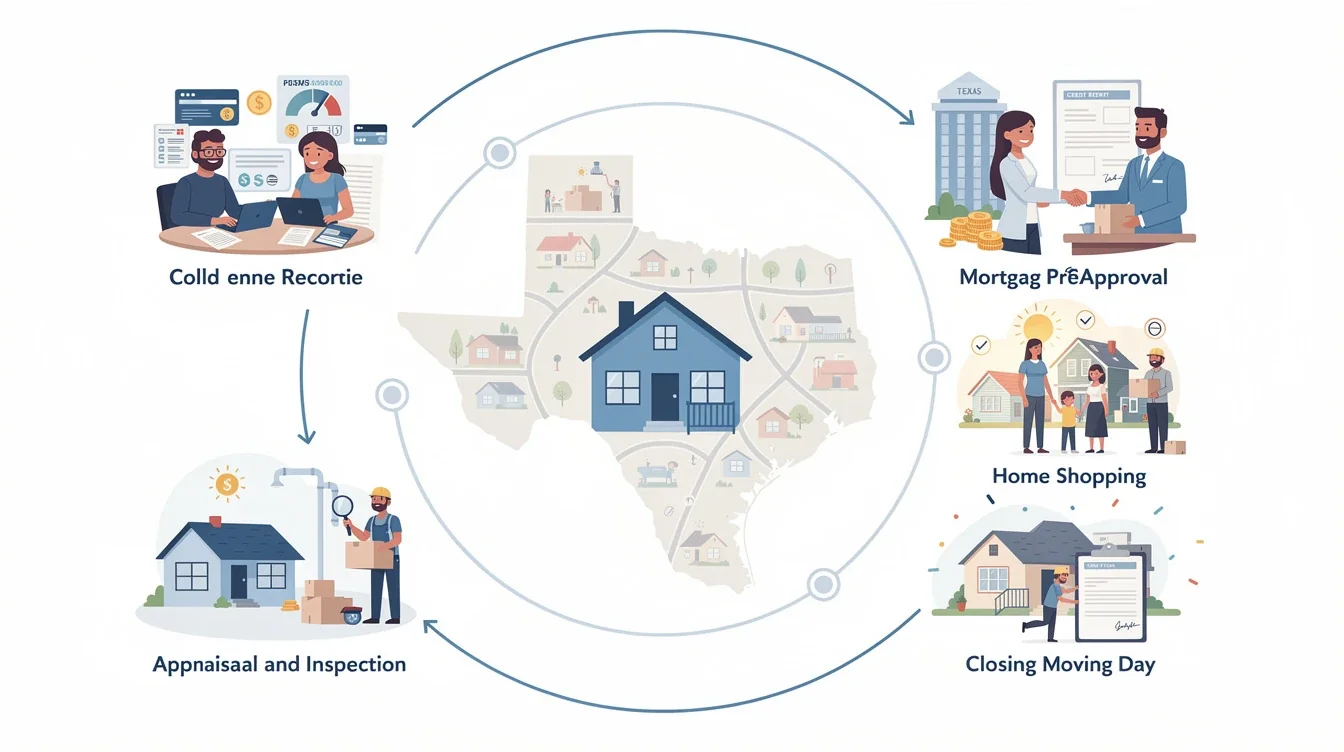
Getting pre-approved for a mortgage before you start house hunting in Texas is a smart move. Pre-approval not only tells sellers you’re serious but also gives you a clear sense of your budget, helping you focus your home search.
Texas’s competitive housing market means homes can move quickly, especially in hot metro areas. Having your pre-approval in hand lets you act fast when you find the right property. Keep in mind that pre-approval letters are generally valid for 60-90 days, so time your application with your relocation plans.
If you’re selling a home in another state, coordinate closely with your real estate agents and lender to align your sale and purchase. Bridge loans or extended closing dates can help smooth the transition if your timelines don’t line up perfectly.
Pro tip: Set up a dedicated folder—digital or physical—for your financial documents. Being organized will make the mortgage process move smoothly when you’re juggling the details of a big move.
Relocation Packages and Employer Assistance
Many people relocating to Texas do so for work, and employers sometimes offer relocation packages that include help with moving expenses, temporary housing, or even mortgage assistance. If your employer offers these benefits, make sure you understand exactly what’s covered.
Some companies partner with mortgage lenders or relocation specialists who can streamline the process and potentially get you better rates or terms. Others may offer a lump sum or reimburse specific expenses. Read the fine print and coordinate with your HR department early in your move to maximize your benefits.
Pro tip: If your employer offers mortgage incentives, ask if you can stack them with state or city-level programs for extra savings.
State and Local Incentives
Texas is known for its business-friendly climate, but homeowners can also benefit from various state and local incentives. First-time buyers may qualify for down payment assistance or lower interest rates through state programs. Certain professions—like teachers, first responders, or healthcare workers—may find special programs tailored just for them.
These incentives can change from year to year, so it’s important to check what’s available as you plan your move. Your lender or real estate agent should be able to direct you to current offers in your new community.
Pro tip: Don’t assume you won’t qualify for assistance—even if you’ve owned a home before, some programs define “first-time buyer” as someone who hasn’t owned in the last three years.
Cost of Living and Budgeting for Texas Life
While Texas is generally more affordable than many other states, costs can add up quickly if you’re not prepared. Besides your mortgage payment, remember to budget for higher summer utility bills—thanks to that famous Texas heat—as well as homeowner’s insurance, which can be higher in certain regions due to weather risks.
If you’re moving to a new city, research commute costs, school districts, and neighborhood amenities. Texas is vast, and even small differences in location can significantly affect your housing and daily expenses.
Pro tip: Ask your real estate agent for a breakdown of average utility costs and insurance premiums in your target neighborhoods to fine-tune your budget.
Conclusion
Relocating to Texas in 2026 is a thrilling opportunity, whether you’re seeking career growth, a new lifestyle, or a more affordable cost of living. At HudsonSullivan, we believe that understanding your mortgage options and planning ahead can make your transition smoother and more enjoyable. From navigating the Texas housing market and securing the right loan to tapping into local incentives and budgeting for life in your new city, a little preparation goes a long way. Welcome to Texas—your next adventure awaits!