First responders are the backbone of our communities, rushing to help when emergencies arise and often putting the needs of others well before their own. If you’re a first responder in Texas, you’ve probably wondered about the resources available to help you achieve homeownership. Thankfully, there are mortgage programs tailored just for you. At HudsonSullivan, we know how important it is for you to find the right support—so let’s dive into what Texas offers first responders looking to buy a home in 2026.
Understanding First Responder Mortgage Programs
First responder mortgage programs are designed to make homeownership more accessible and affordable for those who dedicate their lives to public service. In Texas, these programs often come with benefits like down payment assistance, reduced interest rates, and flexible qualification requirements. Whether you’re a firefighter, EMT, police officer, or another type of first responder, these mortgage options are crafted with your unique needs in mind.
The idea behind these programs is simple: give back to those who give so much. Texas has long recognized the importance of supporting first responders, and over the years, both state and local programs have evolved to provide meaningful assistance. With 2026 around the corner, some programs are seeing updates and improvements, making it an exciting time to explore your options.
Pro tip: Even if you’re a newly hired first responder, you may still qualify for these programs. It’s always worth checking with your lender or local housing agency!
Key Benefits for Texas First Responders
One of the most appealing aspects of these mortgage programs is the range of benefits they offer. For many first responders, the dream of owning a home can seem out of reach due to the high costs associated with buying property. Texas first responder mortgage programs work to break down those barriers.
Some of the key benefits you’ll find include:
- Down Payment Assistance: Many programs provide grants or forgivable loans to help cover your down payment, making it easier to get started.
- Reduced Closing Costs: Some initiatives offer credits or discounts on closing costs, saving you money at the settlement table.
- Competitive Interest Rates: Special rates are available for first responders, often lower than standard market rates.
- Flexible Qualification Criteria: Understanding the unique schedules and income structures of first responders, some programs offer more lenient qualification guidelines.
These benefits can add up to significant savings and a smoother path to homeownership. It’s all about making sure our community heroes have the support they need to put down roots and build a stable future.
Pro tip: Don’t hesitate to ask your lender about stacking benefits—some programs can be combined for even greater savings!
Popular Texas Mortgage Programs for First Responders
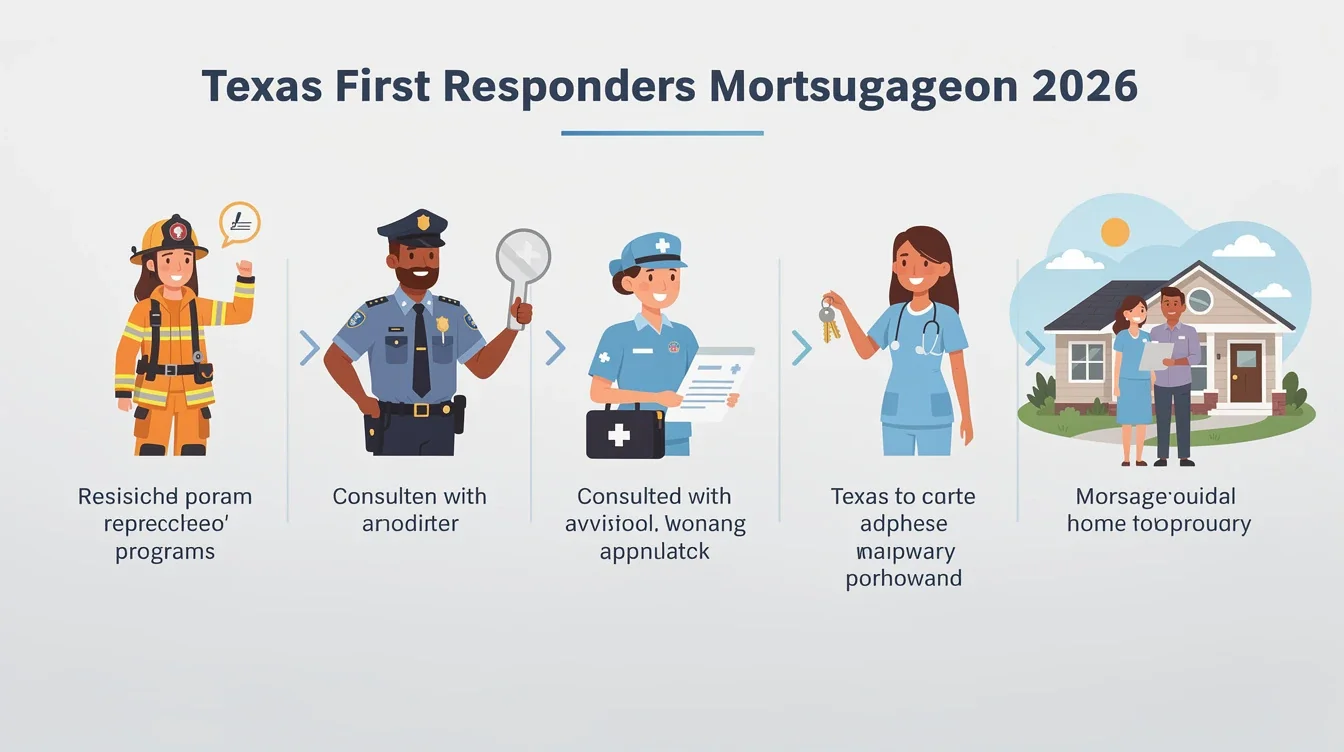
Texas offers a variety of mortgage programs specifically for first responders. Here are a few of the most noteworthy options for 2026:
Homes for Texas Heroes Program
This statewide initiative is one of the most recognized, providing down payment and closing cost assistance to eligible first responders. It’s open to police officers, firefighters, EMS personnel, and even teachers. The program is designed to be straightforward, with an easy application process and clear eligibility requirements.
Local and Regional Initiatives
In addition to statewide options, many local governments and organizations offer their own programs. Some cities and counties in Texas provide homebuyer assistance specifically for first responders, often in the form of grants or deferred payment loans. These programs tend to have limited funding, so it’s smart to apply early.
FHA, VA, and USDA Loans
While not exclusive to first responders, these federally-backed mortgage products can be extremely beneficial. VA loans are available to qualifying veterans or active-duty service members (including some first responders with military backgrounds) and offer zero down payment options. FHA and USDA loans also have low down payment requirements and flexible qualification standards, making them worth considering.
Pro tip: Always check the latest eligibility guidelines—programs change over time, and new options may become available as we approach 2026.
How to Qualify and Apply
Navigating the application process can seem daunting, but with a bit of guidance, it’s more manageable than you might think. Here’s what you need to know to get started:
First, gather documentation that proves your status as a first responder. This might include employment verification, pay stubs, or certification from your department. Next, review the specific eligibility requirements for each program. Some may have income limits, while others focus on first-time homebuyers.
Once you’ve identified a program that fits your needs, reach out to a participating lender. These lenders are familiar with the application process and can help you gather the necessary paperwork. They’ll walk you through the steps—from pre-qualification to closing—and answer any questions along the way.
It’s also a good idea to attend a homebuyer education course if the program requires it. These courses can be valuable, equipping you with knowledge about budgeting, the homebuying process, and long-term homeownership success.
Pro tip: Start your search early. Some programs have limited funding that can run out quickly, especially in high-demand housing markets.
Tips for First-Time Homebuyers
If you’re preparing to buy your first home, you probably have a lot of questions. The process can be overwhelming, but taking it step by step helps. Here are a few tips to get you started:
First, know your budget. It’s easy to fall in love with homes outside your price range, so work with your lender to determine what you can comfortably afford—including monthly payments, taxes, insurance, and maintenance. Next, get pre-approved. This shows sellers you’re serious and helps you move quickly when you find the right house.
Don’t forget to factor in additional costs. Closing costs, moving expenses, and home repairs can add up, so it’s wise to set aside a little extra savings. Finally, work with a real estate agent who understands the needs of first responders. They can help you find properties eligible for special programs and negotiate on your behalf.
Pro tip: Ask your lender or agent about any local incentives or employer-based programs—they may know of resources that aren’t widely advertised.
The Future of First Responder Programs
Texas is known for its commitment to supporting first responders, and 2026 looks to be another year of positive change. As housing markets evolve and the needs of first responders shift, expect to see programs adapt and improve. More agencies and organizations are recognizing the importance of affordable housing for those who serve, which may lead to increased funding, expanded eligibility, or even new types of assistance.
If you’re considering a move or planning to buy your first home in 2026, keep an eye on updates from local and state housing authorities. The landscape is always changing, and new opportunities may arise to help you achieve your homeownership goals.
Pro tip: Stay connected with your professional associations—they often share updates about new or enhanced mortgage programs for first responders.
Conclusion
Owning a home is one of life’s biggest milestones, and for Texas first responders, it’s a goal that’s increasingly within reach. With a variety of mortgage programs, down payment assistance, and flexible loan options available, 2026 is shaping up to be a great year for homebuyers in public service. At HudsonSullivan, we’re here to help you navigate the process and find the support you need. Remember, you’ve dedicated your career to helping others—now it’s time to let Texas help you build the future you deserve.