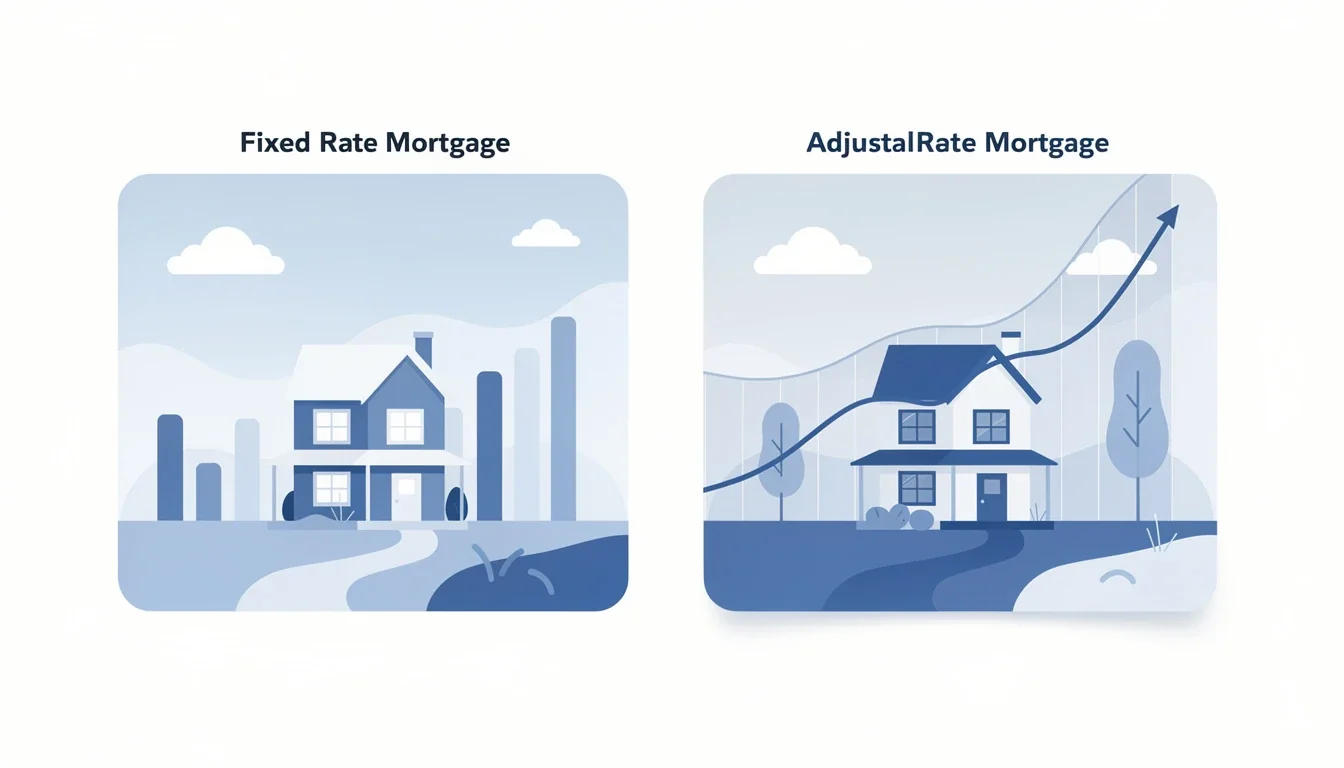
Choosing a mortgage is one of the most important financial decisions you'll ever make. For many, it’s the largest loan they’ll ever take on. At HudsonSullivan, we know how overwhelming it can feel to sort through terms, rates, and options. Two of the most common choices you’ll face are fixed-rate and adjustable-rate mortgages (ARMs). Each has its own strengths and drawbacks, and the best fit depends on your unique situation. In this guide, we’ll help you understand how each type works, what to consider, and how to make the smartest choice for your future home.
Understanding Fixed-Rate Mortgages

A fixed-rate mortgage is exactly what it sounds like: the interest rate stays the same throughout the entire term of the loan. Whether you lock in for 15, 20, or 30 years, your monthly principal and interest payments won’t change. This predictability makes fixed-rate mortgages a favorite for many homebuyers, especially those who plan to stay put for a while.
The main appeal here is stability. You’ll know exactly how much you owe every month, which makes budgeting a breeze. There are no surprises, even if market interest rates rise. It’s a set-it-and-forget-it kind of deal.
Pro tip: If you’re someone who values financial certainty (especially if you’re on a fixed income or planning for the long haul), a fixed-rate mortgage can provide priceless peace of mind.
Exploring Adjustable-Rate Mortgages (ARMs)
Adjustable-rate mortgages, or ARMs, are a bit different. With an ARM, your interest rate is fixed for an initial period—often 5, 7, or 10 years—after which it adjusts periodically based on a benchmark or index. The adjusted rate can go up or down, which means your monthly payment can too.
ARMs often start with lower interest rates compared to fixed-rate loans, making them attractive to buyers hoping to save money in the early years of the loan. But after that initial period, your rate (and payment) could rise, sometimes significantly.
These loans work best for certain scenarios. Maybe you’re planning to move or refinance before the rate adjusts, or you’re confident rates will stay low. Just remember, you’re taking on more risk—you might end up with higher payments in the future.
Pro tip: If you expect your income to grow or you don’t plan to stay in your home long-term, an ARM’s lower initial rate can be a smart way to save. Just be sure you’re comfortable with the uncertainty down the road.
Comparing Pros and Cons
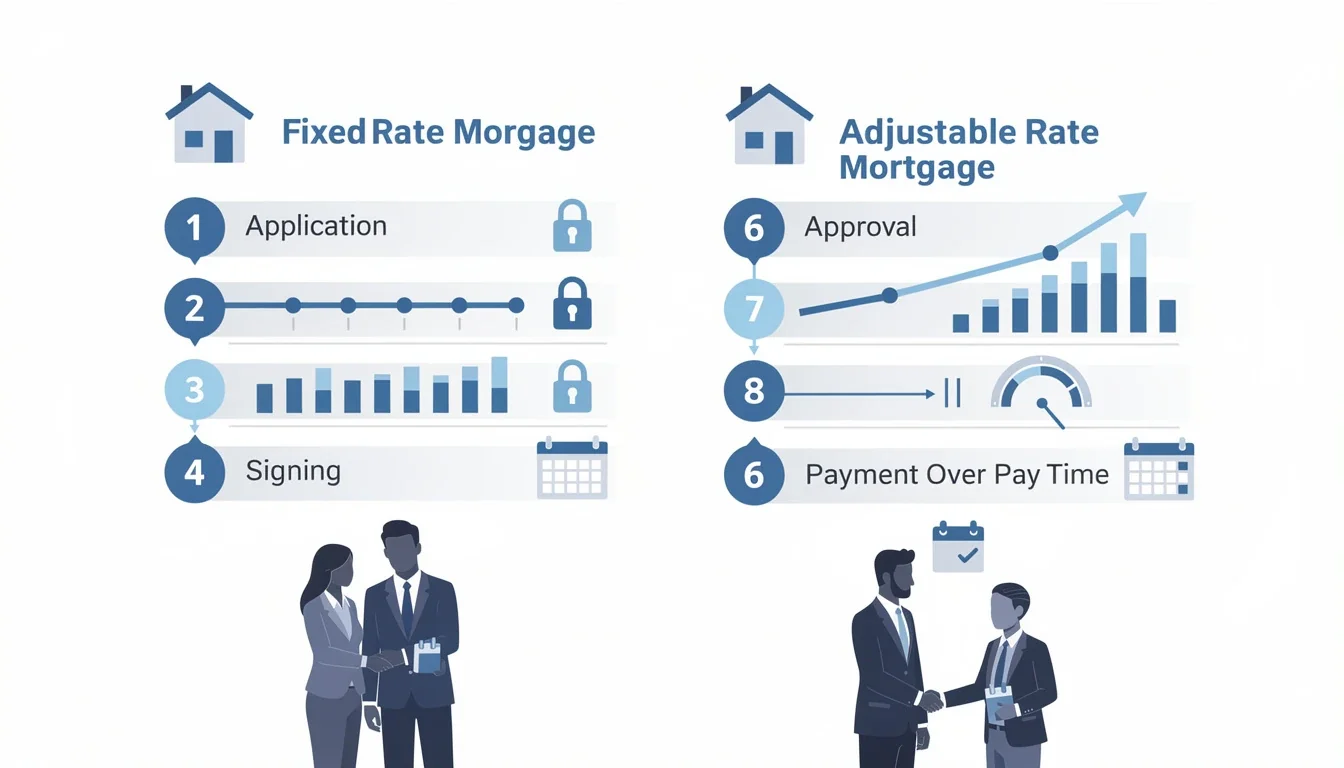
So, how do fixed-rate and adjustable-rate mortgages stack up against each other? Let’s break it down.
Fixed-rate mortgages offer long-term security. You don’t have to worry about rising interest rates, and you can set your budget with confidence. The trade-off? Fixed rates are usually a bit higher than the initial rates on ARMs, so your starting payment might be more.
ARMs, on the other hand, tempt buyers with those low introductory rates. For the first few years, you might pay less each month than with a fixed-rate loan. But after the introductory period, there’s a real possibility your payments will increase—sometimes by a lot, depending on what happens in the broader market.
Think about your risk tolerance and future plans. If you dislike surprises and plan to settle in for a decade or more, fixed-rate is probably the safer bet. If you’re comfortable with change, or you know you’ll move or refinance before the ARM adjusts, the initial savings might be worth the gamble.
Pro tip: Always read the fine print on ARMs. Ask about rate caps, adjustment intervals, and what happens if rates spike—these details matter more than you might think.
Factors to Consider When Choosing
When it comes to mortgages, there’s no one-size-fits-all solution. Here are a few important things to weigh as you decide between a fixed-rate and an ARM.
First, assess your long-term plans. Are you buying your forever home, or is this a stepping stone? If you expect to sell or refinance before an ARM adjusts, you could benefit from the lower initial rate. But if you’ll be there for the long haul, a fixed rate may be safer.
Second, think about your financial situation. Do you have steady income and a strong safety net, or are things a bit more variable? Fixed-rate loans are ideal if you prefer certainty, while ARMs can work if you’re comfortable with some risk.
Third, consider the current interest rate environment. If rates are historically low, locking in a fixed rate can be especially appealing. But if rates are high or look likely to drop, an ARM might give you the flexibility to take advantage of future decreases.
Pro tip: It’s not just about the rate. Factor in closing costs, loan terms, and any penalties for early payoff or refinancing. The details can make a big difference over the life of your loan.
Real-Life Scenarios
Let’s look at a couple of examples to put these choices in context.
Suppose you’re a first-time homebuyer planning to stay in your new place for at least 15 years. You value predictability, and your job is stable. Here, a fixed-rate mortgage might be the obvious choice. You’ll lock in a steady payment and never have to worry about market swings.
Now imagine you’re relocating for work, and you know you’ll probably move again in five years. An ARM with a low introductory rate could save you a significant amount over those years, especially if you sell before the adjustment period kicks in.
Or maybe you’re comfortable with some risk, and you believe interest rates will stay low or even drop further. An ARM gives you the chance to ride the market and potentially pay less over time—but you have to be ready for the possibility of paying more if rates rise.
Pro tip: Run the numbers for both scenarios. Use mortgage calculators to estimate payments now and in the future, and see how different rate changes would affect your budget.
Making Your Decision
Choosing between a fixed-rate and adjustable-rate mortgage comes down to your personal goals, comfort with risk, and financial picture. Take time to think through your plans—both short- and long-term—and don’t be afraid to ask questions. Talk with a trusted mortgage advisor or lender, and make sure you understand all the potential outcomes before making your choice.
Remember, this isn’t just about interest rates. It’s about your lifestyle, your plans, and your peace of mind. A mortgage is a long-term relationship, and you want to start off on the right foot.
Pro tip: Don’t rush your decision. Take the time to compare offers, read the details, and sleep on it before signing anything. A patient, well-informed choice pays off in the long run.
Related Articles
Conclusion
Both fixed-rate and adjustable-rate mortgages have their place in the world of home buying. The best option for you depends on your unique situation, your future plans, and your appetite for risk. At HudsonSullivan, we believe that the right mortgage is the one that fits your life—not just the numbers on a page. Take your time, ask for advice, and trust yourself to make the choice that helps turn your house into a home.