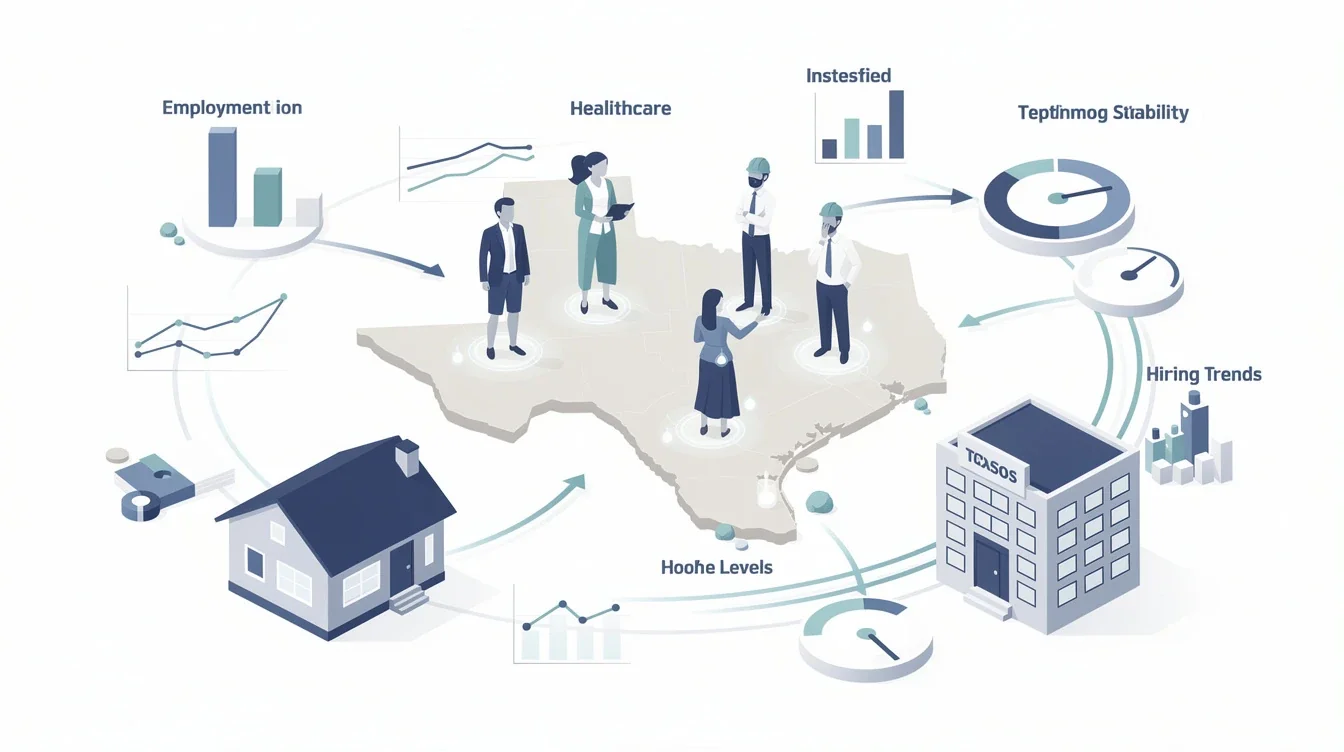
In Texas, where the skyline is ever-changing and opportunity seems boundless, the job market isn't just about finding work—it's the foundation for countless dreams, including homeownership. If you're thinking about buying a home and wondering how your employment situation might impact your ability to qualify for a mortgage, you're not alone. The Lone Star State's unique economic landscape can open doors, but it also brings challenges. At HudsonSullivan, we believe that understanding this connection is key to making smart, informed decisions on your path to homeownership. Let's explore how Texas' job market affects your mortgage qualification and what you can do to strengthen your application.
Texas Job Market: The Big Picture

Texas is famous for its strong economy, boasting one of the highest job growth rates in the nation. Major cities like Austin, Dallas, Houston, and San Antonio are magnets for tech, healthcare, energy, and manufacturing jobs. This vibrant market attracts workers from across the country and keeps unemployment rates relatively low compared to national averages.
But what does this mean for aspiring homeowners? Lenders look closely at local and regional job markets when assessing mortgage applications. A robust job market reassures banks and lenders that borrowers are less likely to experience prolonged unemployment, which translates into lower risk. In Texas, where employment opportunities are generally abundant, this can be a significant advantage for potential homebuyers.
Pro tip: If you're moving to Texas for a new job, bring documentation like offer letters or employment contracts to show lenders your income stability.
Income Stability and Mortgage Approval
Your job isn't just how you pay the bills—it's a major piece of your mortgage puzzle. Lenders want to see a steady income history, typically two years of continuous employment in the same field. In Texas, where job mobility and career changes are common due to the dynamic economy, this can sometimes present a challenge.
For example, if you've hopped between employers or switched industries, lenders may scrutinize your application more closely. However, Texas' reputation for job growth can work in your favor if you can demonstrate that each move was a natural progression in your career or resulted in higher earnings.
Self-employed Texans or those working in the gig economy face a different set of challenges. Lenders tend to require more documentation, such as two years of tax returns, to verify income stability. The good news is that Texas' entrepreneurial spirit is well-known, and many lenders are familiar with non-traditional employment situations.
Pro tip: Keep detailed records of your employment history and income, especially if you’re self-employed or have changed jobs recently—this makes the mortgage process smoother and faster.
How Industry Affects Your Mortgage Chances

Not all jobs are created equal in the eyes of a lender. The industry you work in can have a big impact on your mortgage qualification. Texas’ economy is heavily influenced by energy, technology, healthcare, and education sectors. Stable industries tend to give lenders confidence that your income will continue, making you a more attractive borrower.
For instance, if you work in healthcare or education, lenders may view your job as relatively "recession-proof." On the other hand, those employed in oil and gas, a sector known for cyclical ups and downs, might encounter more questions about income stability during downturns. Nevertheless, Texas’ diversified economy helps offset risks, and lenders are often willing to consider the broader employment picture.
Pro tip: If your industry is subject to seasonal or cyclical fluctuations, explain these patterns to your lender and show how you manage your finances during slow periods.
Location, Wages, and Affordability
Where you work (and live) in Texas can also influence your mortgage prospects. Wages and cost of living vary widely between Austin, Houston, Dallas, and smaller towns. Lenders will look at your income in relation to local housing prices to determine your debt-to-income (DTI) ratio—a crucial factor in mortgage approval.
High-paying jobs in cities like Austin and Dallas can make it easier to qualify for larger loans, but these areas often come with higher home prices. Conversely, in smaller towns where salaries may be lower, housing is typically more affordable, which can offset the income gap. Lenders appreciate when borrowers’ housing expenses are well within their means, regardless of the market.
Pro tip: Use online mortgage calculators to see how your salary stacks up against local home prices and estimate what you can comfortably afford.
Job Changes and Timing Your Application
Timing is everything when it comes to mortgages, and this is especially true if you're in the midst of a job change. Lenders generally prefer applicants who've been in their current position for at least six months to a year. If you’re planning a move—whether it’s for a promotion within Texas or a new opportunity alto gether—it’s best to understand how this could affect your mortgage process.
If your new job offers higher pay and is in the same field, lenders may be more lenient. However, if you’re switching industries or moving from salaried to commission-based pay, expect more scrutiny. In Texas’ thriving job market, many people make these moves regularly, so lenders are used to evaluating a variety of employment scenarios.
Pro tip: If you know a job change is on the horizon, consider securing your mortgage before making the switch. If that’s not possible, keep your lender in the loop about your career plans.
Navigating Mortgage Qualification in Texas
Ultimately, qualifying for a mortgage in Texas means understanding how your income, industry, and local job trends fit into the bigger picture. Lenders want to see stability, reliability, and the ability to repay your loan—even as you take advantage of the opportunities Texas has to offer.
At HudsonSullivan, we recommend working with mortgage professionals who understand the Texas market and can help you present your employment history in the best light possible. Whether you’re a newcomer chasing a tech dream in Austin or a lifelong Texan building a career in energy, the right guidance can make all the difference.
Pro tip: Start gathering employment and income documents early in your homebuying journey—being prepared can help you move quickly when the right house comes along.
Conclusion
Texas’ job market is a driving force behind its booming housing market, but it also plays a crucial role in your ability to qualify for a mortgage. From income stability to industry trends and location, these factors shape your homebuying journey in ways big and small. By understanding the connection between your employment situation and mortgage approval, you’ll be better equipped to turn your Texas homeownership dreams into reality. Remember, preparation and knowledge are your best allies—so lean on the experts at HudsonSullivan to help you every step of the way.