
Navigating the mortgage approval process can be tricky for anyone, but if you're self-employed in the Dallas-Fort Worth (DFW) area, it can feel downright overwhelming. Lenders want to see a crystal-clear picture of your finances, and self-employment often means your income doesn't fit the usual mold. But don’t worry—at HudsonSullivan, we believe homeownership should be accessible for everyone, including entrepreneurs and freelancers. With the right preparation and know-how, you can confidently walk into the mortgage process and come out with the keys to your dream home. Let’s break down what you need to know to get approved for a mortgage as a self-employed professional in DFW.
Understanding Self-Employed Mortgage Requirements

Lenders look at self-employed borrowers a little differently than traditional W-2 employees. Since your income might fluctuate from month to month or year to year, they’ll want proof that your business is stable and your income is reliable. In most cases, you’ll need to show at least two years of steady self-employment income, along with all the usual documentation like bank statements and credit history.
In the DFW market, where competition for homes can be fierce, being organized and ready with your paperwork can make all the difference. Lenders aren’t looking to make things harder for you—they just want to ensure you can manage monthly payments even if your business hits a rough patch.
Pro tip: If you’ve switched from W-2 employment to self-employment in the same industry, some lenders might count your previous experience toward that two-year requirement. It never hurts to ask!
Gathering Key Income Documentation
As a self-employed homebuyer, your paperwork is your golden ticket. Lenders will want to see your last two years of personal and business tax returns, including all schedules and attachments. They’ll also ask for year-to-date profit and loss statements, and sometimes even a balance sheet. This gives them a full picture of how your business is performing.
Don’t forget about bank statements. Lenders use these to verify your deposits and to spot any red flags, like large unexplained transactions. They might ask for anywhere from two to twelve months of personal and business bank statements, so having those ready can save you a ton of stress.
Pro tip: If your most recent tax return shows a drop in income compared to the previous year, be ready to explain the reason. Consistent or growing income is best, but lenders will consider your explanation if there was a temporary setback.
Managing Your Credit and Debt
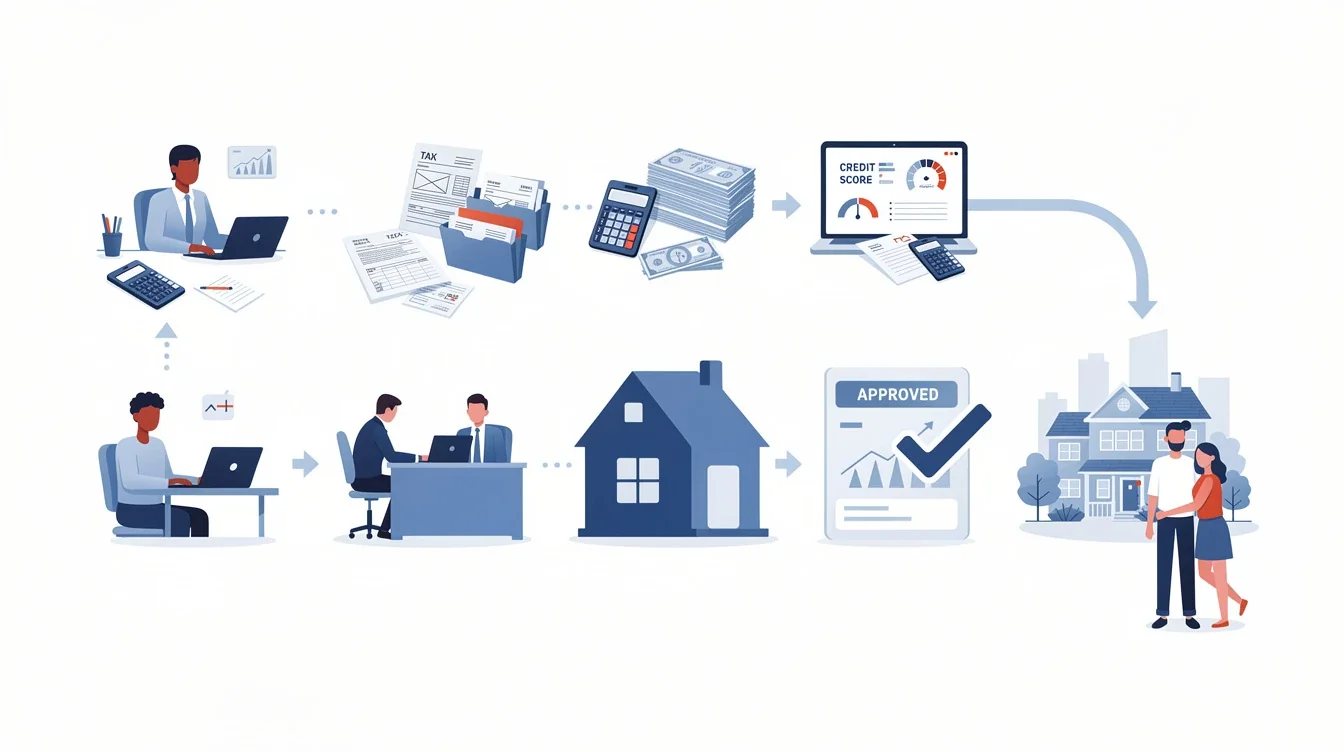
Your credit score is a major factor in mortgage approval, whether you’re self-employed or not. Generally, you’ll want a score of at least 620, but higher is always better for snagging the best rates. Lenders will also look at your debt-to-income ratio (DTI), which is a measure of your monthly debt payments compared to your gross income.
As a self-employed borrower, reducing your personal and business debts before applying for a mortgage can make your application stronger. Pay down credit cards, avoid taking on new loans, and make sure your bills are paid on time.
Pro tip: Monitor your credit report for errors at least six months before you plan to apply. Dispute any inaccuracies early, so your score is in tip-top shape when lenders check it.
Preparing Your Business Details
Lenders want to know that your business is legitimate and stable. You’ll likely need to provide proof of ownership, such as a business license, articles of incorporation, or a statement from your CPA. Be prepared to share how long your business has been operating, what services or products you offer, and how it’s structured (sole proprietorship, LLC, etc.).
In addition, some lenders may want to see information about your clients or contracts, especially if you have a handful of large customers rather than many small ones. If your business experienced a recent growth spurt or industry shift, a brief letter explaining your business model can help put lenders at ease.
Pro tip: Keep your business and personal finances separate. Use dedicated business bank accounts and credit cards to make documentation easier and reduce confusion during the approval process.
Maximizing Your Down Payment
While it’s possible to buy a home with as little as 3% down, self-employed borrowers in DFW often benefit from bringing a larger down payment to the table. A bigger down payment can help offset any concerns about variable income and might even get you a better interest rate.
Saving for a larger down payment also shows lenders you’re financially responsible and committed to the homebuying process. It reduces the overall loan amount, which means lower monthly payments and less risk for everyone involved.
Pro tip: If you plan to use gift funds from family or friends for your down payment, make sure you have proper documentation. Lenders want to see that these funds are truly gifts, not loans that need to be paid back.
Navigating the DFW Real Estate Market
The Dallas-Fort Worth region is known for its vibrant neighborhoods and strong housing market. Inventory can move quickly, so being pre-approved puts you in a stronger position when you find the right home. Self-employed buyers should start the mortgage approval process early—this means gathering all your financial documents and talking to a lender well before you’re ready to make an offer.
It’s also helpful to work with real estate professionals familiar with self-employed borrowers. At HudsonSullivan, we understand the unique challenges you face and can help you connect with trusted lenders and agents who know how to navigate the DFW market on your behalf.
Pro tip: Consider getting pre-approved with more than one lender. This can give you a clearer picture of your options and might help you snag a better deal.
Conclusion
Getting approved for a mortgage as a self-employed professional in DFW might seem daunting, but with the right preparation, it’s entirely possible. The key is organization—having all your documentation ready, understanding what lenders are looking for, and being proactive about your finances. At HudsonSullivan, we’re here to help you every step of the way, so you can focus on finding the perfect home for your life and business. With determination and the right support, your dream of homeownership in DFW is closer than you think.