
Dreaming of owning a home in Texas but discouraged by properties needing a little TLC? You’re not alone. Many Texas homebuyers find themselves drawn to homes with “good bones,” only to worry about how they’ll finance needed renovations. The good news? The FHA 203(k) rehab loan could be your ticket to turning a fixer-upper into your dream home. In this HudsonSullivan guide, we’ll break down what FHA 203(k) loans are, how they work in Texas, and why they might be the perfect fit for your homebuying journey.
FHA 203(k) Loans Explained

If you’ve ever come across a house that’s almost perfect—but not quite—because it needs repairs or updates, you know the frustration. The FHA 203(k) loan is designed for just this situation. Backed by the Federal Housing Administration (FHA), this loan allows you to finance both the purchase price of the home and the cost of eligible renovations with a single mortgage.
This means you don’t have to secure a second loan or dip deep into savings for repairs. Instead, you’ll have one monthly payment covering both the home itself and the work needed to make it shine. This can be a game-changer for Texas homebuyers, especially in competitive markets where move-in-ready homes come with a premium price tag.
Pro tip: FHA 203(k) loans aren’t just for buyers! If you already own a home and want to tackle major renovations, you may also qualify.
How 203(k) Loans Work in Texas
Let’s get into the nitty-gritty of using a 203(k) loan in Texas. The process starts off much like a traditional home loan. You’ll find a lender that offers FHA 203(k) loans, get pre-approved, and start house hunting with your real estate agent. The difference comes once you’ve found a home that needs repairs.
After signing a purchase agreement, you’ll work with licensed contractors to get estimates for the renovations you want. The lender then appraises the home’s “after improved value”—what it’ll be worth once the work is completed. Your loan amount is based on this improved value, allowing you to borrow more upfront.
There are two main types of 203(k) loans:
- The Standard 203(k) is for major repairs or structural work, including room additions or foundation fixes.
- The Limited 203(k) is for non-structural updates under $35,000, like new flooring, kitchen remodels, or painting.
The funds for improvements are held in escrow, ensuring contractors are paid as work is completed. This protects both you and your lender, guaranteeing the project gets finished.
Pro tip: In Texas, always work with contractors who are familiar with FHA requirements to avoid delays or headaches during the renovation process.
Benefits for Texas Homebuyers
Why should you consider a 203(k) loan over traditional financing? For many Texas buyers, the benefits are compelling. First, you’ll get to purchase homes in neighborhoods or locations you love, even if the existing inventory is a little dated or in need of repairs. With the loan covering both purchase and renovation, you can personalize your space right from the start.
Another big plus is the low down payment. Like other FHA loans, the 203(k) requires as little as 3.5% down, making it accessible for many first-time buyers. This is especially helpful in Texas cities where home prices continue to rise.
And let’s not forget the potential for instant equity. By improving a property’s condition, you may boost its value significantly. This can be a smart long-term investment, especially if you’re able to buy below market value and make strategic upgrades.
Pro tip: Even if you’re looking at a home that needs a lot of cosmetic work, the 203(k) loan can help you create the home you want without waiting years to save up for renovations.
Eligible Repairs and Improvements
One of the most exciting things about the FHA 203(k) loan is its flexibility in what it covers. Eligible improvements go beyond simple paint jobs. You can finance structural repairs, update kitchens and bathrooms, replace roofs, install energy-efficient windows, or even add new rooms.
Here’s a taste of what’s allowed:
- Structural alterations and reconstruction
- Modernizing kitchens and bathrooms
- Eliminating health and safety hazards
- Adding or replacing flooring, appliances, or HVAC systems
- Improving accessibility for disabled persons
However, there are some limitations. Luxury upgrades—like swimming pools or elaborate outdoor kitchens—aren’t typically covered. Your lender and HUD-approved consultant (required for standard 203(k) loans) will help ensure your renovation plans stay within FHA guidelines.
Pro tip: Have a clear vision and detailed list of desired repairs before starting the process. This helps streamline lender approval and avoids scope creep during renovations.
Steps to Getting a 203(k) Loan in Texas
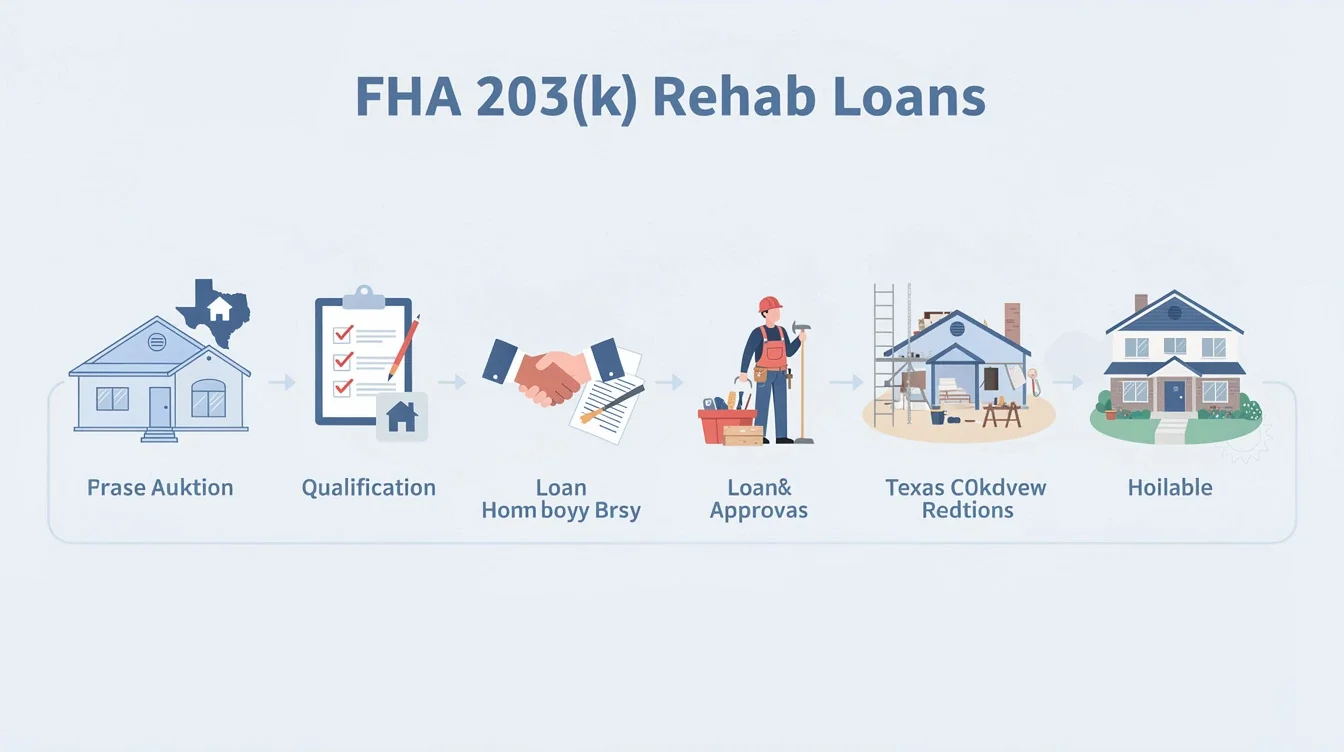
Ready to dive in? The 203(k) process takes a bit more planning than a traditional loan, but it’s very doable with the right approach. Here’s how most Texas homebuyers get started:
- Get pre-approved with a 203(k) lender. Not all lenders offer these loans, so shop around.
- Find a home that fits your needs and qualifies for FHA financing.
- Work with contractors—ideally those experienced with 203(k) projects—to create detailed repair bids.
- Submit your bids and renovation plans to the lender.
- The lender orders an appraisal that considers the home’s future value after renovations.
- Once approved, close on your home and renovations begin! Funds are paid out as work is completed, with inspections along the way.
Because the process involves more moving parts, patience and organization are key. Having a knowledgeable loan officer and real estate agent on your side can make all the difference.
Pro tip: Start gathering paperwork early—income statements, tax returns, contractor bids—to keep your application moving smoothly.
Common Myths and Misconceptions
There are a few myths about the 203(k) loan that can keep buyers on the sidelines. For instance, some believe it’s only for major “gut jobs” or that the process is too complicated. In reality, the limited 203(k) is perfect for smaller projects, and experienced lenders can guide you step by step.
Another misconception is that you have to move out during renovations. While major repairs might require it, many projects allow you to live in the home while work is completed. And while the paperwork is a bit more involved, the opportunity to customize your home from the start is well worth it for many buyers.
Pro tip: Don’t let misinformation stop you. Reach out to an FHA-approved lender to discuss your specific situation and see if a 203(k) loan makes sense for your Texas homebuying goals.
Conclusion
Purchasing a home that needs work doesn’t have to be overwhelming or out of reach. With the FHA 203(k) rehab loan, Texas homebuyers can unlock new possibilities, transforming fixer-uppers into personalized dream homes—all with one convenient loan. Whether you’re a first-timer eager to put your stamp on a space, or a seasoned homeowner looking to renovate, the 203(k) offers flexibility, affordability, and the chance to build lasting value.
If you’re ready to explore your options or have questions about getting started, the HudsonSullivan team is here to help guide you every step of the way. Happy house hunting, and here’s to turning your Texas home dreams into reality!