Buying a home in Texas is an exciting milestone, but the process can also feel overwhelming—especially when it comes to closing costs. You may have heard about down payments and mortgage rates, but what about all those extra fees that seem to pop up at the last minute? At HudsonSullivan, we believe you deserve clarity and confidence. That’s why we’ve created this complete guide to hidden closing cost fees in Texas mortgages. By the end, you’ll know exactly what to watch for, how to prepare, and how to avoid unpleasant surprises.
Understanding Texas Closing Costs

Before you sign on the dotted line, it’s important to know what “closing costs” really mean. In Texas, closing costs typically range from 2% to 5% of your home’s purchase price. While some charges are standard—like loan origination fees and title insurance—others can sneak up on you. These hidden fees can add hundreds or even thousands of dollars to your final bill.
Most buyers are prepared for the big-ticket items, but it’s the smaller, less-publicized costs that catch folks off guard. Things like survey fees, escrow account reserves, and transfer taxes can make your head spin. Knowing what to expect puts you in the driver’s seat, ready to negotiate or plan accordingly.
Pro tip: Request a Loan Estimate from your lender early on. This document lists all expected costs, so you can spot unusual or unexpected fees right away.
The Most Common Hidden Fees
Let’s dive into the hidden fees that often surprise Texas homebuyers. While your lender will provide many disclosures, some costs show up late in the process or are easy to overlook in the paperwork.
Survey Fees: In Texas, a property survey is often required to confirm boundaries. If the seller doesn’t have an updated survey, you could be on the hook for $400–$900. This fee is rarely advertised upfront.
HOA Transfer Fees: If your new home is in a homeowners association, expect an HOA transfer fee at closing. This covers the administrative work to transfer ownership. The cost ranges widely, from $100 to over $500.
Escrow Account Reserves: Lenders often require you to prepay several months of property taxes and homeowners insurance into an escrow account. It’s not a “fee” per se, but it adds to your cash needed at closing—and the amount can be surprisingly high.
Recording Fees: The county charges a fee to record your deed and mortgage documents. This can be a few hundred dollars, depending on local rates and the number of documents.
Courier and Wire Fees: These small administrative charges (usually $25–$100 each) cover the cost of wiring money and delivering documents. They seem minor but can add up quickly.
Pro tip: Ask your real estate agent or lender for a customized closing cost worksheet early in your search. This keeps you aware of fees unique to your transaction and location.
Fees Unique to Texas Mortgages
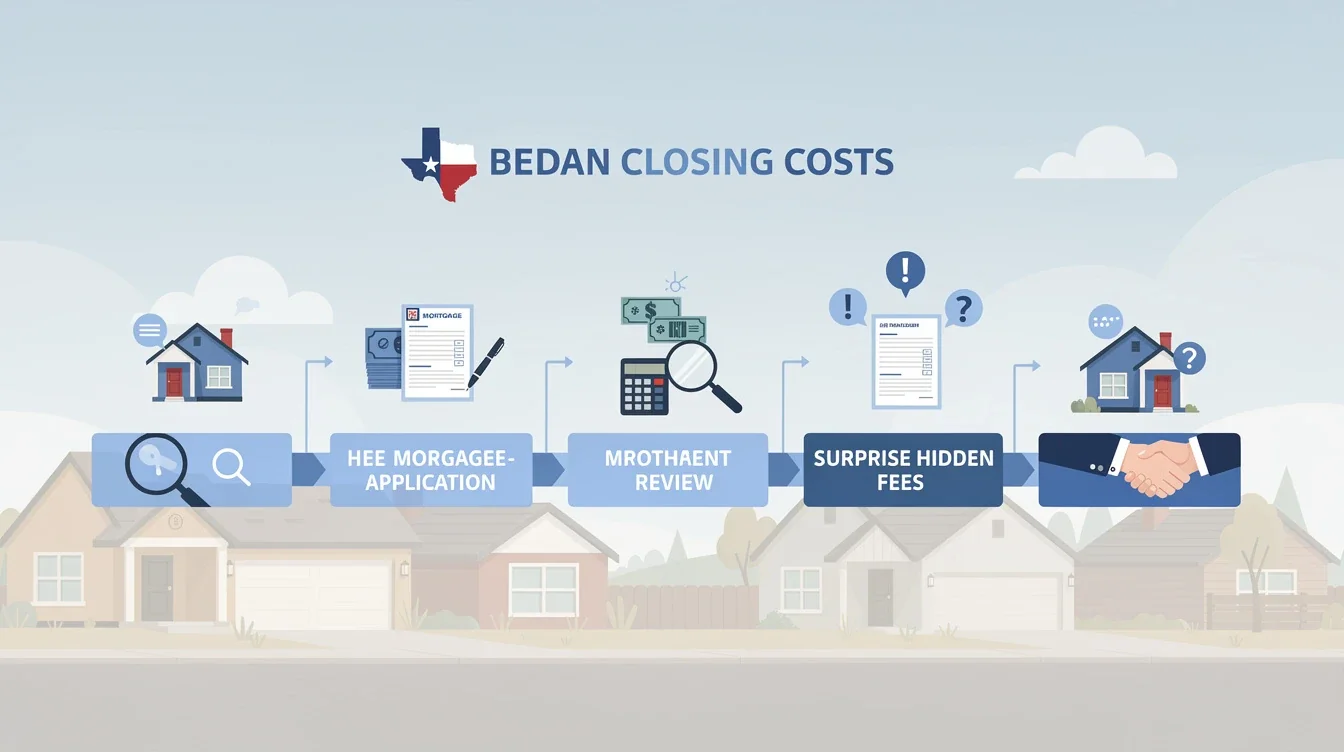
Texas has a few quirks when it comes to closing costs. Some fees are specific to the Lone Star State’s rules and customs, and they may not apply if you’re moving from elsewhere.
Title Insurance: Texas regulates title insurance rates, so you’ll pay the same amount no matter which title company you use. However, certain endorsements and optional coverages can add extra costs. These are often presented as “recommended” but may not be essential for every buyer.
Attorney Review Fees: While not mandatory in Texas, some buyers choose to have an attorney review their documents, especially for complex purchases or rural properties. Attorney fees vary, but they can be a few hundred dollars for a simple review.
Survey Affidavit: If the seller provides an old survey, you might need to sign a survey affidavit stating that no changes have been made to the property since the last survey. Some title companies charge a small fee for this document.
Option Fee: Separate from your earnest money, the option fee gives you the right to terminate the contract during the option period. While not a “closing cost” in the traditional sense, it’s an upfront expense Texas buyers should plan for.
Pro tip: In Texas, sellers sometimes pay some closing costs as part of negotiations. Don’t be shy about asking your agent if seller concessions are possible to offset some fees.
How to Spot and Avoid Junk Fees
Not all closing costs are legitimate or necessary. Occasionally, lenders or title companies tack on “junk fees”—charges that serve little purpose other than boosting profits. Examples include excessive processing fees, padded courier charges, and redundant administrative costs.
Review Documents Carefully: The Loan Estimate and Closing Disclosure are your best friends. Compare the two documents line by line. If you spot new or higher fees at closing, ask for clarification.
Shop Around: Not all service providers charge the same. For example, you can choose your own title company, surveyor, or homeowners insurance provider. Getting multiple quotes can save you hundreds of dollars.
Question Everything: If a fee seems vague or unnecessary, ask your lender or title agent to explain it. Sometimes, just questioning a charge leads to its removal or reduction.
Pro tip: Watch out for “processing” or “application” fees from mortgage brokers. These are negotiable—and sometimes, they can be waived entirely if you ask.
Preparing for Closing Day
You’ve made it to the finish line! But before you celebrate, make sure you’re ready for closing day. Surprises can still happen, especially if final figures change at the last minute.
Triple-Check Your Closing Disclosure: You’ll receive your official Closing Disclosure at least three days before closing. Go through it with a fine-tooth comb, cross-referencing with your Loan Estimate. If you spot errors or unexpected fees, bring them up immediately.
Bring the Right Funds: Your lender or title company will tell you the exact amount to bring to closing, usually in the form of a cashier’s check or wire transfer. Make sure you have a little extra set aside, in case of last-minute adjustments.
Know Who Pays What: In Texas, it’s customary for buyers and sellers to split certain costs, but these are always negotiable. Review your purchase contract and confirm who’s covering title insurance, survey fees, and other shared expenses.
Don’t Be Afraid to Delay: If something doesn’t look right, it’s better to pause closing than to rush through and regret it later. No one wants a delay, but most issues can be resolved quickly with clear communication.
Pro tip: Ask for a “preliminary” Closing Disclosure a week in advance. This gives you more time to review and fix any errors before the official 3-day window.
Your HudsonSullivan Closing Cost Checklist
Now that you know what to expect, here’s a practical checklist to help you stay organized and avoid hidden fees:
Request a Loan Estimate as soon as you apply for a mortgage.
Ask your lender and agent for a detailed breakdown of all expected closing costs.
Shop around for title insurance, surveyors, and homeowners insurance.
Clarify which fees are negotiable or can be waived.
Check for duplicate or vague charges on your Loan Estimate and Closing Disclosure.
Confirm who pays for each fee (buyer or seller) according to your contract.
Set aside extra funds for escrow account reserves and last-minute adjustments.
Schedule a final review of your Closing Disclosure before signing.
Pro tip: Keep a dedicated folder (digital or paper) for all your closing documents and receipts. This makes it easy to verify charges and reference your paperwork if questions arise.
Conclusion
Buying a home in Texas should be a joyful and rewarding experience—not a stressful guessing game. By understanding hidden closing cost fees and using this checklist, you’ll approach your closing with confidence, knowing you’re prepared for every line item. At HudsonSullivan, we’re here to guide you every step of the way. With a little planning and the right questions, you’ll unlock the front door to your new home—no surprises, just peace of mind.